

Twenty-five Very New, Foolproof Methods to Finally Rid Yourself of Insomnia
Alicia Oltuski imagines a humorous list of very unhelpful recommendations for insomniacs.
Alicia Oltuski imagines a humorous list of very unhelpful recommendations for insomniacs.
Emily Nussbaum writes about a new kind of show, in which an ensemble tells an individual’s story in unison, sometimes down to the thoughts inside her head.
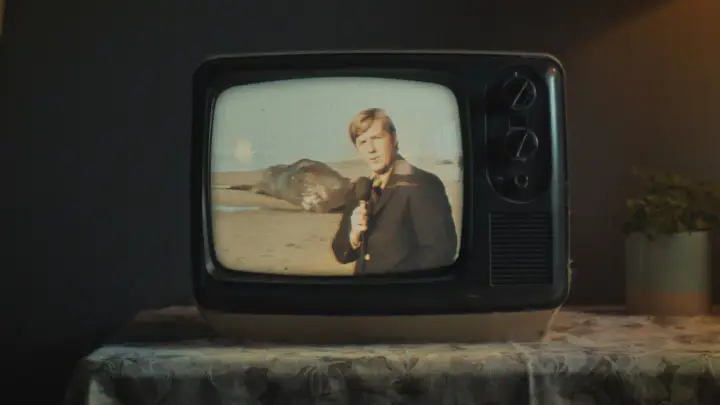
In Winslow Crane-Murdoch’s film “Oh, Whale,” a journalist reflects on a weird, odorous story that defined his career—and on what it taught him about fate.
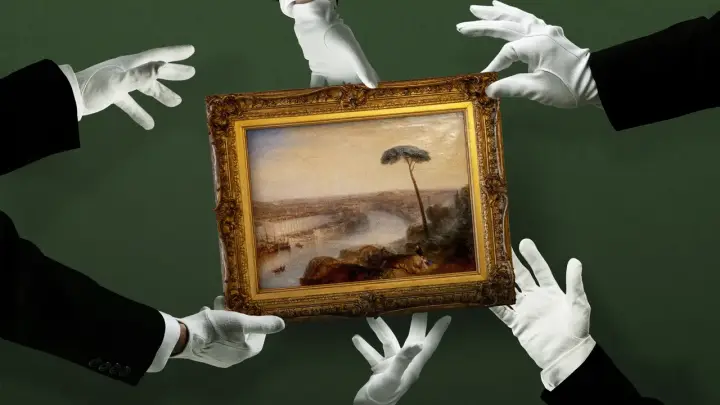
Anthony Lane writes about the history of the oil painting “Rome, from Mount Aventine,” by J. M. W. Turner, now on view at Sotheby’s, on Madison Avenue.
Donald Trump’s war of choice with Iran—a strategic debacle that has hurt ordinary Americans—is at the heart of a historic rebuke to his Presidency and his party, Ishaan Tharoor writes.
With Democratic majorities in the House and Senate, oversight, and its frustrations, return. Ruth Marcus on how the incoming Congress will seek to investigate the Trump Administration and hold it to account.
Rachel Monroe reflects on the Democrats’ wins in Texas in the 2026 midterm elections, and on the hopes for the state that the Party has held for more than a decade.
Susan B. Glasser on the results of the 2026 midterm elections and what it means for Donald Trump and the Republican Party.
Natalie Waksman illustrates the story of how her O.C.D. led to her being hit by a car as a teen-ager, and how she came to understand the disorder.
Madeleine Wulfahrt reviews the French writer Emmanuel Carrère’s latest book, “Kolkhoz,” a conflicted family story that intertwines with Russian history.
The rejection of the President in the midterm elections is undeniable, and it reached deep into what had long been understood as conservative territory, Benjamin Wallace-Wells writes.
Ruby Cramer writes about Haley Stevens’s surprise decision to endorse Mike Rogers instead of Abdul El-Sayed in the U.S. Senate race in Michigan.
The latest from crucial Senate, House, and gubernatorial races across the country, with real-time reporting and commentary.
The vote counts from key Senate, House, and gubernatorial elections around the country.
River Clegg jokingly imagines a day in the life of a Washington, D.C., insider, complete with lobbying, anonymous leaks, and breakfast served by Mitt Romney.
Justin Chang reviews the film directed by Javier Ambrossi and Javier Calvo and starring Guitarricadelafuente, Carlos González, and Miguel Bernardeau.
Susan Glasser on Donald Trump’s final appearances in his final campaign as the let-them-eat-cake President.
Manvir Singh on a new definition of Alzheimer’s that has polarized researchers and clinicians.
Cal Revely-Calder reviews “The Telephone: A New History,” by James Gleick.
Abdul El-Sayed fears that high-profile attacks have compromised his safety—but he also argues that they’ve given him “one of the biggest and best platforms.” Eliza Griswold reports.
Adam Hamilton’s campaign tests whether Democrats can find religion, Emma Green reports.
Stephania Taladrid writes a profile of Gina Hinojosa, the Democratic candidate for governor of Texas.
Mary Peltola, whose campaign could determine whether the Democrats retake Congress, mostly just wants to talk about fish, Zach Helfand writes.
Rachel Monroe writes about Meta’s law-enforcement-outreach team, and about those who monitor social media in an effort to prevent school shootings and other acts of violent extremism.
Jesús Rodríguez on Troy Jackson, the former state senator replaced Graham Platner as Maine’s Democratic nominee, who reminded voters over Labor Day weekend that “it could have been anyone else.”
Nincs több hír ebben a nézetben